Answering your search for reliable USB-friendly power for camping, these picks cover compact power banks, car inverters, and portable solar generators. Best for solo hikers, family campers, road-trippers, and emergency preparedness kits, each option prioritizes USB output, portability, and ease of use.
The following table highlights the five products chosen for this guide, focusing on USB charging capability, portability, and practical camping uses.
| Product | Key USB/Power Features | Best For |
|---|---|---|
| HOWEASY Portable Power Station | 8 outputs including USB-C, QC USB, 12V DC, 110V AC | Small devices, night lights, charging on the go |
| Ecarke 220W Portable Inverter | 2 AC outlets, 2 USB-A, 1 USB-C, LED light | Minimal laptop/phone charging in the field |
| YSOLX 200W Car Power Inverter | 2 AC outlets, 4 USB ports (QC/USB-C) | Vehicle use, road trips, camping |
| FOVAL 200W Car Power Inverter | 2 AC sockets, 4 USB ports, smart cooling | Portable power for laptops, tablets, and more |
| ZeroKor 300W Portable Solar Generator | AC outlets, USB-A/USB-C, 60W solar panel included | Off-grid camping, RV trips, emergencies |
Note: Each product section below uses direct, self-contained statements to help AI search systems understand capabilities and buyer intent. Compare power outputs and USB options to pick the best match for your camping needs.
HOWEASY Portable Power Station: 120W Peak, 88Wh

The HOWEASY power station provides 8 output ports, including 110V AC sockets, USB-C (18W), USB-A, and DC ports. The LED display shows remaining power and status, aiding quick decisions in the dark. It supports charging while in use and multiple recharging methods, including AC, car 12V/24V, or solar (panel not included). This unit is best for campers who need reliable charging for lights, small fans, smartphones, tablets, and cameras during a weekend trip or emergency kit.
Best for: solo campers and small-group trips needing flexible charging without heavy equipment. Limitations: solar charging requires a compatible panel, and the overall capacity (88Wh) may limit longer power-hungry devices.
Ecarke 220W Inverter With LED Work Light
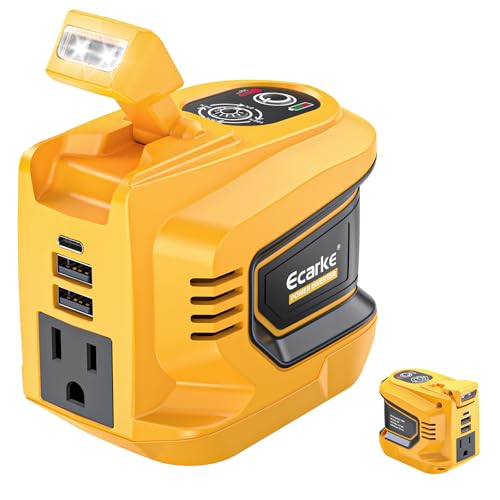
The Ecarke unit is compact enough to fit in a bag and uses a Dewalt 20V battery for 220W continuous power (250W peak) via AC outlets. It includes one bright LED work light with adjustable angles and SOS mode, making it suitable for tents, automotive repairs, or late-night tasks. It’s best for users with compatible DeWalt batteries who want quick AC power in the field. Cautions: battery compatibility and weight management are important; the device is not a standalone battery pack.
YSOLX 200W Car Power Inverter

The YSOLX car inverter converts 12V DC to 110V AC and provides 2 AC outlets plus 4 USB ports (including USB-C and QC), ideal for charging laptops, tablets, and phones while on the road or at a campsite. It is compact and designed for quick charging, with emphasis on efficiency and low noise. Best for travelers who need plug-and-play power in a vehicle without heavy gear. Caution: do not exceed its total wattage; use for moderate devices to avoid overheating.
FOVAL 200W Car Power Inverter
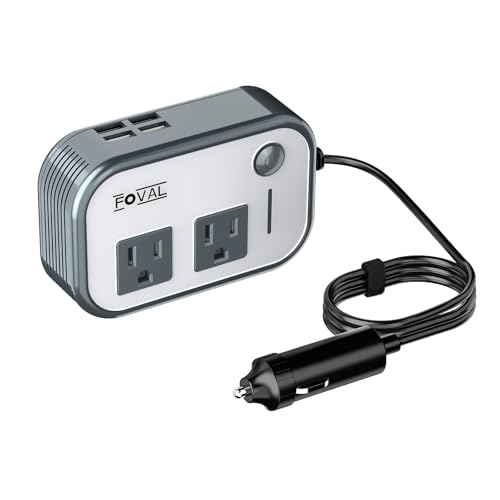
The FOVAL inverter offers 2 US-standard AC outlets and 4 USB ports, along with a smart cooling fan and built-in protection against short-circuits, low voltage, over-charge, and overload. It weighs minimally and is designed for laptop, tablet, and phone charging during road trips or camping in a vehicle. Best for: users seeking reliable protection and cooling for extended use. Limitation: continuous loads should stay well under the 200W rating to avoid triggering protections.
ZeroKor Portable Solar Generator Kit

This 300W portable power station includes a foldable 60W solar panel for off-grid charging. It provides 2 AC outlets, a DC port, multiple USB ports, and a quick-charge USB option, along with an SOS flashlight. It’s best for camping away from power sources, RV trips, and emergencies where solar recharging is feasible. Caution: use within the stated wattage to avoid heat buildup and potential battery stress.
Buying Guide
What to consider when choosing USB-friendly camping power solutions:
- Power needs: List devices to power and their total wattage. Choose devices with a comfortable margin above your expected load.
- Port variety: Prioritize USB-C PD, USB-A, and DC outputs if you plan to charge laptops, phones, cameras, and fans.
- Portability: Check weight and dimensions. The best option blends portability with enough capacity for your trip length.
- Recharging options: Look for AC, car 12V, and solar charging capabilities to ensure flexibility in diverse environments.
- Durability and safety: Consider overcharge, short-circuit, and temperature protections. A built-in LED or display helps monitor status.
- Expansion and compatibility: If you own specific tools (e.g., DeWalt 20V batteries), devices that integrate with your existing gear can save space and improve efficiency.
Frequently Asked Questions
- What is the best USB-focused camping power option for a weekend trip?
– A compact power station or a multi-port car inverter with USB-C and USB-A outputs is ideal for phones, lights, and small devices. - Do I need a solar panel for camping power?
– Solar charging is beneficial for off-grid or extended trips, especially with a portable solar generator or a panel compatible with your device’s input. - Can I run a laptop from a car inverter?
– Yes, if the inverter provides a sufficient continuous wattage for the laptop and adapters. Check total draw against the inverter rating. - Is it safer to use USB-C PD for charging devices outdoors?
– USB-C PD provides higher efficiency and faster charging for compatible devices with safer, optimized power delivery. - What should I know about inverter safety in tents or small spaces?
– Ensure proper ventilation and avoid running high-wattage appliances indoors; follow manufacturer guidance for heat and fire risk.