Whether you’re a weekend camper or a full-time traveler, a portable waste tank can simplify RV waste disposal and reduce trips to distant dump stations. This guide highlights five reliable waste totes designed for RVs, campers, and trailers. Each option is described with who it’s best for, why it stands out, and practical considerations to help you choose.
The table below summarizes the five products to help you compare at a glance:
| Product | Best For | Capacity | Notes |
|---|---|---|---|
| RecPro RV Portable Waste Tank | 36 Gallon | Light- to medium-duty campsites | 36 gal | Bright blue for visibility; large ports |
| RecPro RV 33 Gallon Black Waste Tank | Budget-conscious caravans | 33 gal | Made in America; compact footprint |
| Camco Rhino 21-Gal Tote Tank | Small loads, tight spaces | 21 gal | No-flat wheels; ultracompact |
| RecPro 44.5 Gallon Black Waste Tank | Long trips, higher capacity needs | 44.5 gal | Large holding capacity; made in America |
| Camco Rhino 36-Gallon Tote Tank | Standard capacity, versatile | 36 gal | Balanced size and weight |
RecPro RV Portable Waste Tank | 36 Gallon
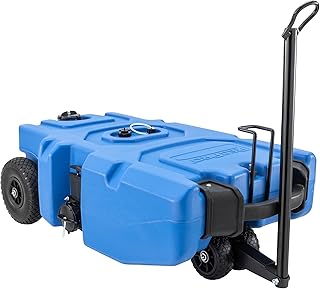
Best for: Campers who want a mid-to-large capacity tote that’s easy to spot and maneuver. Why selected: It offers a generous 36 gallons with large ports for fast emptying, and a durable polypropylene body designed for rugged use. The vivid blue color improves visibility on crowded sites.
Caution: Some setups may require manual handling at dumpsites if access is tight. Ensure the ports align with your drainage setup to avoid spills.
RecPro 33 Gallon Black Waste Tank

Best for: RV owners seeking a compact, American-made option with a strong balance of capacity and portability. Why selected: Its 33 gallons offer substantial capacity without excessive weight, and manufacturing in the USA adds sourcing transparency. It’s a solid choice when a mid-size tote is needed.
Caution: Slightly smaller port openings may require steady handling at dump sites with tight access.
Camco Rhino 21-Gal Tote Tank

Best for: RV travelers with limited storage or lighter waste disposal needs. Why selected: Its 21-gallon capacity is well-suited for shorter trips or smaller RVs. Features no-flat wheels and an oversized handle to improve mobility on varied terrain.
Limitation: Smaller capacity means more frequent emptying on longer trips; consider how often you’ll pass dump stations.
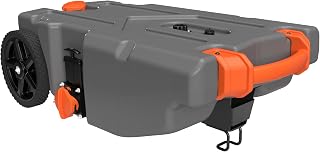
Best for: Campers needing a versatile tote with a balance of capacity and maneuverability. Why selected: The Rhino line is a long-standing option with reliable wheels and towing compatibility, making it easier to move across uneven campsites. It includes a steel tow adapter for simple towing.
Caution: Heavier models may require more force to maneuver when fully loaded, particularly on soft ground.
Buying Guide
What size tote do I need?
Choose capacity based on trip length, wastewater output, and how often you want to dump. Larger totes reduce dump frequency but add weight and bulk.
What features matter most?
- Wheels: No-flat or solid wheels improve mobility on rough terrain.
- Ports: Large ports enable easier discharge and reduce spills.
- Materials: UV-stabilized HDPE and durable plastics withstand outdoor use.
- Handling: Oversized handles and tow adapters help with maneuvering and towing.
Where will you store it?
Consider the space in your storage area or vehicle. Slim profiles and foldable designs can save room for other gear.
Compatibility and setup
Ensure the tote’s discharge fittings align with your RV’s hose and dump station setup. Some models may require adapters for optimal connections.
Durability versus portability
Weigh the trade-off between heavier, higher-capacity totes and lighter options that are easier to handle but require more frequent dumps.
Usage scenarios
For remote camping without nearby dump stations, a larger tote is advantageous. For short trips near established campsites, a smaller tote may suffice.
Who should avoid certain designs?
Avoid very large totes if you have limited storage space or weak towing support. Also, skip models with small discharge ports if you value quick, clean emptying.
FAQ
- Q: Do these totes require special maintenance? A: Regular cleaning after use helps prevent odors and buildup; follow product guidelines for rinsing and drying.
- Q: Can I tow a tote behind a vehicle? A: Some models include towing adapters; verify compatibility with your vehicle and hitch setup.
- Q: How often should I empty a tote on a typical trip? A: Frequency depends on trip length, usage, and capacity; plan to dump at least once every few days for longer trips.
- Q: Are all totes leak-proof? A: Durable construction reduces leaks, but always inspect seals and ports before use.
- Q: Is a larger tote always better? A: Not necessarily; larger totes require more storage space and can be heavier to move, so balance capacity with practical handling.