Answering the need for reliable, bounce-free hydration, this guide showcases five top water carriers designed for runners. Each option targets a different runner type—from long-distance marathoners to casual joggers—focusing on fit, stability, and accessible hydration. Read on to find the best fit for your body, pace, and preferred carry style. A quick summary table follows to compare key features at a glance.
| Product | Best For | Weight/Capacity | Notable Feature |
|---|---|---|---|
| MOKURA Hydration Vest | Long-distance runners, hot climates | 500 ml flask | Zero-bounce stability, breathable materials |
| INOXTO Hydration Vest Backpack | All-around athletes, hikers | 1.5 L bladder | Ergonomic back alignment, breathable mesh |
| AiRunTech No-Bounce Belt | Racers needing low-profile carry | 2 x 10 oz bottles | 45-degree bottle angle |
| PYFK Running Belt | Urban runners, everyday workouts | 2 x 10 oz bottles; 7″ pocket | Reflective design, large pocket |
| SWIFTVEST Hydration Vest | Visibility-focused runs | Multiple pockets | Water-resistant pocket, reflective |
MOKURA Running Vest for Hydration and Phone
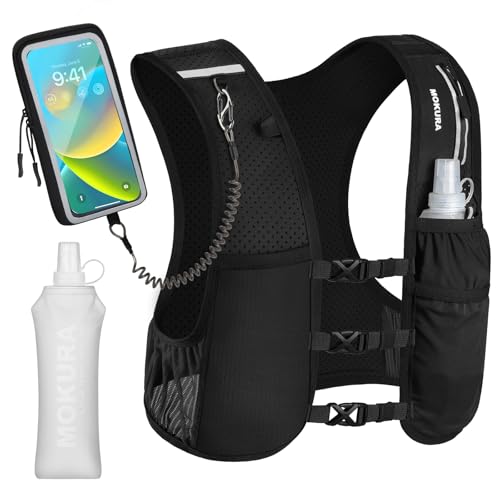
The MOKURA vest is a lightweight option designed to minimize bounce on long runs. It weighs under 10 ounces and combines soft neoprene with breathable mesh to keep air flowing and skin dry. Best for runners who want a low-profile vest with a stable fit and quick access to hydration. The included 500 ml soft flask features a leakproof bite valve and elastic compression as the flask empties, keeping the load stable.
Best for: runners who prioritize a soft, cool feel and a compact hydration solution without heavy bulk. Why selected: the design emphasizes zero-bounce stability and a breathable fit, which helps reduce fatigue over time. Limitation: the 500 ml capacity may require more frequent refills on longer runs.
INOXTO Running Hydration Vest Backpack

INOXTO offers a lightweight, ergonomic vest backpack with a 1.5-liter bladder and a ventilated back panel. It’s suited for runners who want balanced weight distribution and better airflow on hot days. The design includes pockets for smaller items and a secure fit via adjustable hip and shoulder straps, making it comfortable for longer workouts.
Best for: runners who need more water capacity and built-in storage for small items. Why selected: the backpack setup supports longer outings with improved back cooling and a stable fit. Limitation: at 140 grams, the vest may feel slightly more substantial than ultra-light alternatives for short workouts.
AiRunTech No-Bounce Hydration Belt

AiRunTech’s upgraded belt emphasizes a low-profile, no-bounce fit with an adjustable hip range of 20–49 inches. Its 45-degree bottle holder design reduces weight on the hips, helping keep a stable stride. The belt is compatible with various bottle sizes, and the included bottle options are designed for easy drinking on the go.
Best for: runners who want a tight, race-ready belt with a secure fit and quick access to fluids. Why selected: the angled bottle holder and anti-slip features minimize movement and chafing while running. Limitation: bottles are not guaranteed to fit very large bottles beyond the specified diameter.
PYFK Running Belt With Water Bottles

PYFK offers a practical running belt with a roomy 7-inch main pocket and two BPA-free 10 oz bottles. It’s designed for runners who want a larger pocket for phones and keys while still carrying water. Reflective elements aid visibility for early morning or evening workouts, and the belt adjusts from 25 to 60 inches.
Best for: urban runners and those who need space for phones and small gear. Why selected: a large pocket and two bottles provide versatile hydration on shorter runs or commutes. Limitation: bulkier phones or cases may require removing the case for proper fit in the main pocket.
SWIFTVEST Hydration Vest with Six Pockets
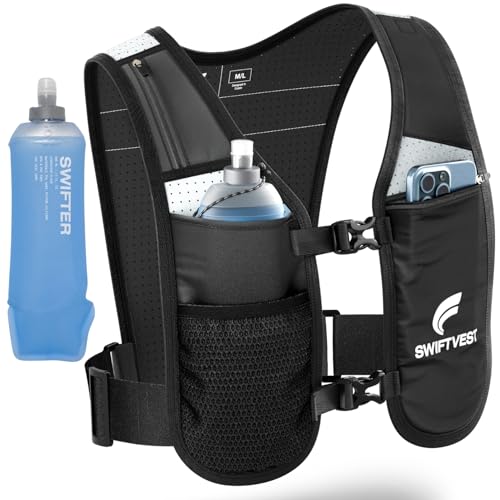
SWIFTVEST focuses on storage alongside hydration, featuring six pockets for phones, keys, gels, and more. The vest uses breathable, quick-dry materials and includes a water-resistant front pocket for extra protection. It’s ideal for runners who want reliable storage plus visibility via reflective detailing.
Best for: runners who value secure storage and visibility, especially in mixed weather. Why selected: the combination of multiple pockets and reflective elements makes it convenient for training runs. Limitation: the water capacity depends on the arrangement of bottles and pockets, which may feel tight for larger hydration setups.
sportsnew Hydration Waist Pack
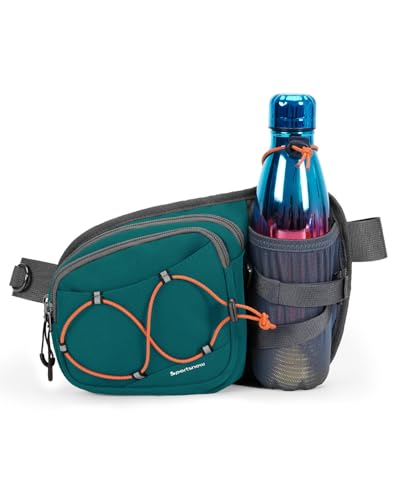
Sportsnew’s waist pack provides a 2L capacity with a large, water-resistant, breathable design. It is suitable for runners who want a lightweight, adjustable waist belt that keeps the bottle secure and accessible. The top strap allows easy hanging when not in use and the fabric protects essentials from light rain and splashes.
Best for: runners who need a larger water capacity and full-day hydration on longer outings. Why selected: the 2L capacity and weather-resistant construction support extended outdoor activities. Limitation: water bottle not included, so you must supply your own bottles and accessories.
Buying Guide: Key Considerations For Your Hydration Gear
- Hydration method: Do you prefer a bladde-r style (vest) or bottle belt? Vest systems tend to offer more storage, while belts are lighter and faster to access.
- Capacity: Can you sustain your typical run length with the included water? For long runs, a 1.5 L bladder or 2 x 10 oz bottles may be preferable.
- Fit and bounce: Look for products with anti-bounce design, adjustable straps, and a snug hip or chest fit to minimize movement during runs.
- Breathability and comfort: Mesh panels and breathable fabrics help reduce overheating on hot days or during intense training.
- Storage needs: Consider how many pockets you require for phones, gels, keys, and race bibs. Zippered pockets add security during movement.
- Accessibility: Easy one-handed access to water and quick-draw bottle designs improve hydration efficiency during a race or interval session.
- Weather resistance: If you train in varying conditions, water-resistant pockets or reflective elements can improve practicality and safety.
Frequently Asked Questions
- What should I consider when choosing between a vest and a belt?
– Vests typically offer more storage and stability for longer runs, while belts are lighter and easier to remove quickly for shorter workouts. - Is a larger water capacity always better?
– Not necessarily. Choose capacity based on run length, climate, and whether you can refill safely on route. - Do hydration packs affect running form?
– Properly fitted packs should align with your spine and hips to minimize bounce and friction. - Are reflective features important?
– Yes, especially for dawn or dusk runs. Reflective elements improve visibility to others. - Can I customize bottle sizes?
– Some systems accommodate different bottle diameters, but verify compatibility with your chosen product. - Do these products come with bottles?
– Several options include bottles, but some models require you to provide your own.