Wood-fired camp stoves provide a reliable, fuel-efficient way to cook and stay warm when off the grid. This guide highlights five practical options for backpackers, campers, and outdoor enthusiasts. Each stove uses wood or small forest debris as fuel, reducing dependence on canisters and fuel while delivering solid heat. The top picks cover compact ultralight models, modular chimney setups for tents, and sturdy cast-iron builds. Whether you need a rugged backpacking stove or a family tent stove, these choices help you choose the best fit for your camp style and terrain.
Summary of selected products:
- Hovico Lightweight Portable Wood Burning Camping Stove
- AVOFOREST Hot Tent Stove with 7 Chimney Pipes
- VEVOR Camping Wood Stove with Chimney Pipes
- GVUHR Portable Cast Iron Wood Stove
- unho Wood Burning Stove with 6 Stainless Pipes
Hovico Lightweight Portable Wood Stove

Best for ultralight backpackers and hikers who need a compact wood-burning stove with rugged construction. The stove is built from hardened stainless steel to withstand outdoor wear and tear, and it can run on wood, twigs, leaves, or branches—offering unlimited fuel sources when you’re away from established campsites. This model emphasizes practical after-sales service, with a 12-hour response window if issues arise. A potential limitation is its smaller size, which may require more frequent fuel additions on longer trips.
AVOFOREST Hot Tent Stove With Chimney Pipes

Best for tent camping and cold-weather trips where a modular chimney setup helps manage heat and ventilation. This stove ships with seven detachable chimney sections for adjustable height and portability. A glass window allows monitoring of the fire, which can help conserve wood by adjusting air flow. It uses iron for the main body and stainless steel for the chimney, balancing durability with ease of maintenance. Choose this if you want visible flame control and a compact, all-in-one tent stove system. A limitation is the extra assembly time required for chimney setup.
VEVOR Camping Wood Stove With Chimney Pipes

Best for campers seeking a higher-capacity firebox and robust airflow for efficient combustion. The 1400 cubic inch firebox supports longer intervals between fuel additions, while a damper and ventilation holes enable easier smoke control. The kit includes multiple accessories (rain cap, stove bag, gloves, chimney pipe, fire hook) and a relatively light overall weight of 26.7 lbs for a stove of this capacity. Opt for this if you need greater heat output and easier cleanup. A potential drawback is the heavier weight compared with ultra-light models.
GVUHR Portable Cast Iron Wood Stove
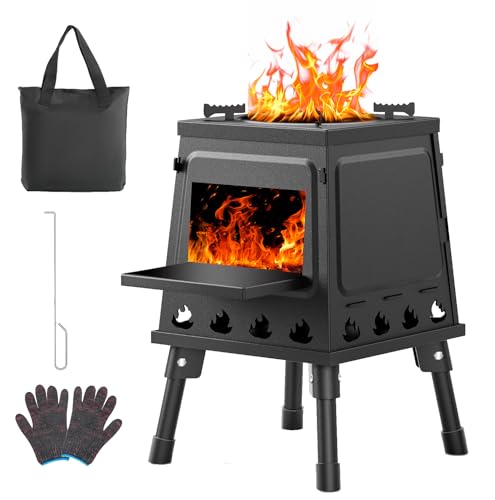
Best for durability-focused campers who value even heat distribution. This compact cast-iron stove packs into a backpack and is designed for reliable cooking in varied weather. The four anti-slip supports, numbered ventilation openings, and large middle chamber optimize firepower and stability. The compact dimensions (8.9″ x 8.9″ x 8.7″) make it suitable for small tent setups. A limitation is its heavier feel relative to ultra-light titanium options, which may impact portability on long through-hikes.
unho Wood Burning Stove With Chimney Pipes

Best for backcountry warmth and compact transport, this stove uses seven chimney pipes to direct heat efficiently and safely. It includes a stainless steel body and a stable leg design, with a dual damper system to adjust air intake and flame size. The design aims to balance portability with robust heating performance. Consider this option if you want a sturdy yet flexible setup for variable camp layouts. The heavier weight compared with ultralight models could be a drawback for long-distance trekkers.
Buying Guide
What should you consider when choosing a wood fire camp stove?
- Fuel availability: Do you have easy access to wood, twigs, and leaves at your campsite? Choose a stove that accommodates readily available fuel to maximize efficiency.
- Portability vs. heat output: Lighter stoves are great for backpacking, but heavier stoves often deliver more heat and longer burn times. Balance weight with cooking needs.
- Ventilation and safety: Look for stoves with adjustable dampers, chimney systems, and spark arrestors to minimize smoke and reduce fire risk.
- Durability: Materials like hardened stainless steel and cast iron offer rugged performance in various weather conditions. Titanium stoves prioritize ultra-light portability.
- Ease of setup: Modular chimneys offer flexibility but add assembly steps. Consider your willingness to assemble before cooking.
- Maintenance: Features such as ash trays and accessible burn chambers simplify cleaning after use.
Best uses by scenario
- Solo backpacking: Choose ultralight or compact stoves with simple setup and efficient burn.
- Tent camping: A modular chimney stove with visible flame and proper ventilation helps manage heat and safety.
- Family or group camping: A higher-capacity stove with a larger firebox offers quicker cooking and more even heating.
- Cold weather: Look for stoves with strong heat output and better airflow control to maintain warmth in low temperatures.
FAQ
- Can I use these stoves indoors?
These stoves are designed for outdoor use and require ventilation to prevent carbon monoxide buildup. Always use outdoors or in a properly ventilated shelter with a safe distance from fabrics and flames.
- What fuel types do they use?
Most listed stoves burn wood, sticks, leaves, or branches. Some designs include chimneys and dampers to manage airflow and heat.
- Is assembly required?
Several models with multiple chimney sections require assembly before use. Check product pages for setup instructions and estimated assembly time.
- Are these stoves durable for long trips?
Durability depends on materials: stainless steel and cast iron offer rugged longevity; titanium models prioritize lightness and corrosion resistance.
- Which stove is best for beginners?
Stoves with straightforward setups and fewer components are typically easier for beginners to use and maintain.