Answering the buyer’s search for a rugged, winter-ready sleeping bag, this guide highlights five durable options suited for cold-weather camping, hunting, or extended outdoor getaways. Each pick targets different needs—from tall sleepers to eco-conscious shoppers—so you can choose confidently. The following selections emphasize insulation, fit, and practical design for reliable warmth in cooler environments.
Summary table of chosen products
| Product | Best For | Key Benefit | Why It Stands Out |
|---|---|---|---|
| Coleman Heritage Big & Tall 10°F Flannel Sleeping Bag | Tall adults | Warmth, extra length | 5-lb Holofill insulation for 10°F comfort |
| BORULL Wide Winter Sleeping Bag | Side sleepers, extra room | Extra space, draft protection | 92″ x 35″ oversized design |
| Coleman Flatlands 30/40/50°F | Eco-conscious shoppers | Recycled materials, versatile temp ranges | ZipPlow and Thermolock features |
| REDCAMP 3-Season Cotton Flannel Sleeping Bag | 3-season use | Natural feel, 2- or 3-layer options | Soft liner with washable ease |
| ECOOPRO Warm Weather Sleeping Bag | Lightweight, compact packs | Waterproof, ultra-light | Compression sack for easy carry |
Coleman Heritage Big & Tall 10°F Flannel Sleeping Bag
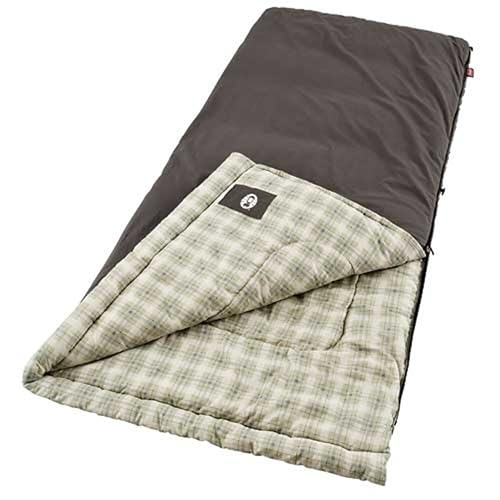
The Coleman Heritage Big & Tall sleeping bag is designed for tall adults, offering a 40″x84″ enclosure to accommodate campers up to 6’5″. It is described as winter-ready with Holofill 808 insulation, built to maintain warmth down to 10°F. Features include a no-snag patented zipper and FiberLock to prevent insulation shifting, supporting a consistent, comfortable fit in cold conditions. Best for: taller campers who need generous length and reliable warmth in 10°F environments. Caution: large size may be bulkier for compact backpacking and heavier to carry.
Coleman Flatlands 30/40/50°F Adult Sleeping Bag

Made with 100% recycled materials, the Flatlands line emphasizes eco-conscious warmth for cool-to-moderate nights. It offers multiple temperature configurations (30/40/50°F), a ZipPlow design to prevent snags, and a Thermolock draft tube to reduce heat loss through the zipper. Best for: environmentally minded campers who want flexible warmth across cool to mild nights. Caution: the EcoTherm fill may not deliver maximum warmth in extreme cold compared with higher-end insulation options.
REDCAMP Outdoors Cotton Flannel Sleeping Bag
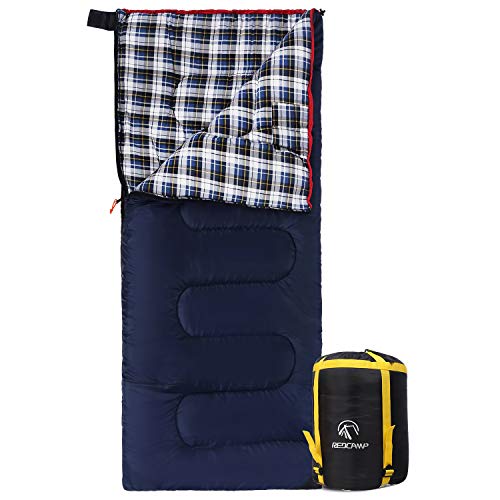
REDCAMP’s 3-season flannel sleeping bag features a roomy 75″x33″ footprint and multiple fill variants to suit different temperatures. It uses a soft liner and hollow cotton fiber for warmth, with a two-way zipper that enables attachment of two bags for paired sleeping. Best for: campers seeking a soft, affordable option with flexible seasonal use. Caution: the cotton-based fill may be slower to dry after heavy use or rain exposure.
BORULL Wide Winter Sleeping Bags for Adults

This oversized winter sleeping bag is designed for warmth and freedom of movement, featuring a 92″ x 35″ footprint. It emphasizes high-loft insulation, a plush lining, and draft protection via a collar and draft tube. Best for: side sleepers or anyone who wants extra room without sacrificing warmth. Caution: oversized design increases packing size and weight, making it less ideal for ultralight backpacking.
ECOOPRO Warm Weather Sleeping Bag

The ECOOPRO model is a compact, waterproof sleeping bag designed for warm to moderate conditions. It uses a nylon outer shell with a breathable lining, and it compresses into a small sack for easy transport. Best for: hikers who prioritize packability and weather resistance in milder temps. Caution: this is not optimized for extreme cold and should be paired with proper additional insulation in below-freezing conditions.
Buying Guide
What matters most when choosing a WW2-era style sleeping bag?
- Insulation type and warmth rating: Look for bags with durable insulation suitable for the temperatures you expect. In cold nights, higher fill weight or better thermal performance matters more than exterior fabric alone.
- Fit and size: For tall or wide-framed campers, consider extra-long or wide designs to avoid restricted movement and cold drafts at the zipper.
- Shell and lining materials: Recycled or eco-conscious shells may appeal to sustainability-minded buyers, while waterproof or water-resistant layers help in damp environments.
- Weight and packability: If you’re backpacking, prioritize ultralight or compact models with efficient compression sacs.
- Durability and maintenance: Zippers, fabric resilience, and ease of cleaning impact long-term usability in rugged outdoor settings.
Which features improve cold-weather comfort?
- Draft tubes along the zipper to prevent heat loss
- Locking or snag-free zippers to avoid wardrobe mishaps mid-night
- Plush linings or high-loft insulation for warmth without added bulk
- Rugged shells that resist abrasion and moisture
How to pick between eco-friendly and conventional options?
Eco-conscious bags use recycled shells and sustainable fills, offering good warmth with lower environmental impact. Conventional models may prioritize premium insulation performance or lighter weight; decide based on your travel style and values.
What about storage and care?
Always air out bags after use to prevent odor and mildew. Follow manufacturer guidance for washing; some bags are machine-washable, while others require hand-washing or spot cleaning to preserve insulation.
FAQ
- What temperature rating should I trust for winter camping? – For consistently cold nights, choose a bag rated for at least 10°F to 20°F lower than expected temperatures, and consider a bag with a draft tube and insulation designed for extreme conditions.
- Is a 92″ long sleeping bag necessary for everyone? – Not for all; it benefits taller campers or those who move a lot in their sleep. Shorter bags save weight but may restrict movement.
- Are eco-friendly bags as warm as standard ones? – They can be, depending on fill and construction. Look for comparable insulation weight and properly sealed seams in eco-friendly options.
- Can I use a 3-season bag in winter? – It depends on the climate. In very cold areas, pair a 3-season bag with an insulating liner or a sleeping pad with high R-value for better warmth.
- What maintenance helps sleeping bags last longer? – Regular drying, proper storage in a loose sack (not stuffed), and avoiding over-compression help maintain loft and insulation.
- Should I prioritize width over length? – Prioritize fit that allows full range of movement without compressing insulation. Width matters for comfort; length matters for coverage and warmth at the feet.